

Transparency Matters At Lissmy.com, I only recommend products I have researched and truly love. Affiliate links in this post mean I may earn a small commission if you make a purchase at no extra cost to you. As an Amazon Associate, I earn from qualifying purchases. This helps keep this site running and the content free thank you for your support!
| Medically Reviewed Disclaimer: |
| This article is for informational purposes only and does not constitute medical advice. It is not a substitute for professional medical advice, diagnosis, or treatment. Always seek the advice of your physician or another qualified health provider with any questions you may have regarding a medical condition or before starting, stopping, or altering any medication or supplement regimen. |
Table of Contents
1. The Hidden Link between Your Medicine Cabinet and Your Complexion
Have you ever started a new medication, only to notice a few weeks later that your skin has become inexplicably dry, broken out in stubborn acne, or developed a strange rash?
Alternatively, perhaps you have been on a long-term prescription for years and have accepted persistent bloating and dull, lackluster skin as your “new normal.”
You are not imagining it.
There is a powerful, and often overlooked, connection between common medications and the health of your skin.
This connection is called the gut-skin axis.

Many widely prescribed drugs, while essential for managing various health conditions.
Can inadvertently disrupt the delicate balance of your gut microbiome, damage your intestinal lining, and trigger systemic inflammation all of which will inevitably show up on your face.
For women over 35, whose gut health and hormonal landscape are already navigating natural changes, this disruption can be particularly pronounced.
The good news is that awareness is the first step.
By understanding which medications are the most common culprits, you can have an informed conversation with your doctor about supportive strategies and potential alternatives.
For a foundational understanding of how your gut and skin communicate, please see our detailed guide:
2. Understanding the Gut-Skin Axis (A Quick Refresher)
In simple terms, your gut and your skin are in constant conversation.
Your gut microbiome the trillions of bacteria living in your digestive tract plays a crucial role in regulating your immune system and controlling inflammation throughout your body.
• A healthy, diverse gut microbiome sends signals of calm and balance to your skin, promoting a clear, resilient, and radiant complexion.
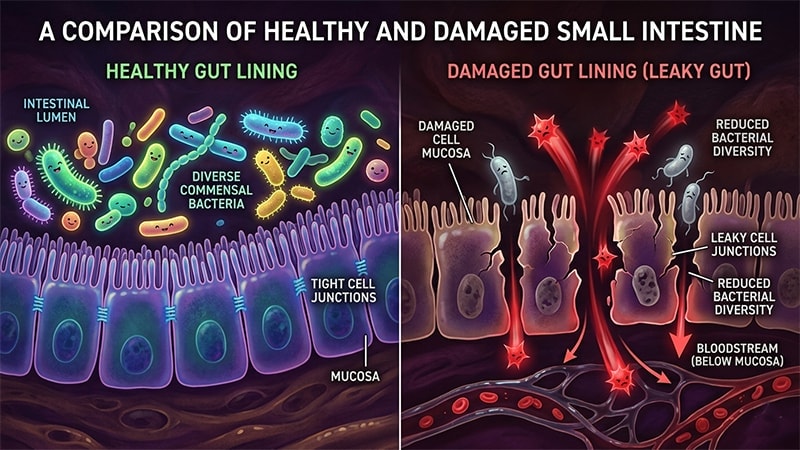
• An imbalanced gut microbiome (dysbiosis), often triggered by medications, can weaken the gut lining (a condition often called “leaky gut”).
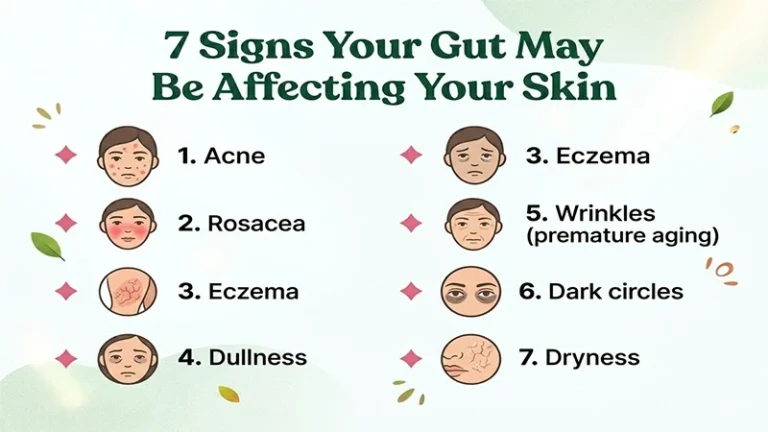
This allows inflammatory particles to escape into your bloodstream, creating a state of low-grade, systemic inflammation that manifests on your skin as acne, rosacea, eczema, dullness, and even premature aging.
Thus, any medication that significantly alters your gut flora or damages your gut barrier has the potential to directly affect your skin’s health.
To learn how to identify if your skin issues are gut-related, read our guide:
3. The 5 Common Culprits
Based on current scientific evidence, these five classes of medication are the most common disruptors of the gut-skin axis.
Medication 1: Broad-Spectrum Antibiotics
Why they are prescribed:
To kill harmful bacteria causing infections (e.g., strep throat, UTIs, sinus infections).
How they disrupt the gut-skin axis: Antibiotics are not smart bombs; they are carpet bombers.
They destroy both harmful and beneficial bacteria in your gut, leading to significant dysbiosis.
This allows opportunistic pathogens like C. difficile to flourish, weakens the immune system, and promotes systemic inflammation.
The result?
For many women, a course of antibiotics is directly followed by a bout of hormonal or cystic acne.
What you can do: Only take antibiotics when they are necessary (they are useless against viral infections like the flu or common cold).
When you do take them, it is crucial to replenish your gut flora.
A high-quality probiotic, taken at least 2-3 hours apart from the antibiotic, can help mitigate the damage.
Our:
BIOHM Women’s Probiotic Review.→Discusses a potent formula for this very purpose.
Medication 2: Proton Pump Inhibitors (PPIs)
Why they are prescribed:
To reduce stomach acid for conditions like GERD (chronic acid reflux), heartburn, and stomach ulcers.
Common names include omeprazole (Prilosec), esomeprazole (Nexium), and lansoprazole (Prevacid).
How they disrupt the gut-skin axis: Stomach acid is your body’s first line of defense against ingested pathogens.
By drastically reducing acid levels, PPIs allow harmful bacteria from your mouth and food to survive the stomach and colonize the small intestine, leading to a condition called Small Intestinal Bacterial Overgrowth (SIBO).
SIBO is a major cause of bloating, gas, abdominal pain, and can trigger skin conditions like rosacea.
Long-term PPI use is also linked to nutrient malabsorption (e.g., magnesium, vitamin B12), which is essential for skin health.
What you can do:
For many people with mild to moderate reflux, PPIs are overprescribed.
Discuss with your doctor if you can try lifestyle changes (elevating the head of your bed, avoiding late-night meals, losing weight) or a less potent antacid like Gaviscon or Tums for occasional use.
For acute bloating and indigestion, explore natural options like:
FDgard.→which uses caraway oil and L-Menthol without disrupting gut flora.
Medication 3: Non-Steroidal Anti-Inflammatory Drugs (NSAIDs)
Why they are prescribed:
To reduce pain, inflammation, and fever.
Common names include ibuprofen (Advil, Motrin), naproxen (Aleve), and aspirin.
How they disrupt the gut-skin axis: NSAIDs are a leading cause of drug-induced “leaky gut.”
They work by inhibiting enzymes called COX-1 and COX-2, which are involved in inflammation.
However, COX-1 inhibition also reduces the production of prostaglandins that protect the gut lining.
This directly increases intestinal permeability, allowing toxins and undigested food particles to leak into the bloodstream and trigger systemic inflammation.
What you can do:
For chronic pain management, work with your doctor to find the root cause.
For acute pain, try to use the lowest effective dose for the shortest duration possible.
Natural alternatives like turmeric (curcumin) and omega-3 fatty acids have potent anti-inflammatory effects and can be discussed with your doctor as safer long-term options for some conditions.
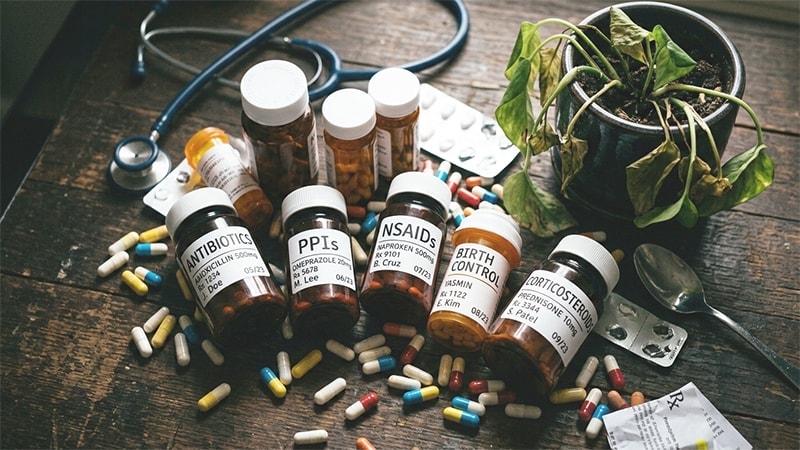
Medication 4: Oral Contraceptives (Birth Control Pills)
Why they are prescribed:
For pregnancy prevention, and to manage conditions like PCOS, endometriosis, or severe acne.
How they disrupt the gut-skin axis:
Synthetic hormones alter the gut microbiome, decreasing microbial diversity.
They also affect how your body metabolizes and eliminates toxins and hormones.
This can lead to estrogen dominance, gut dysbiosis, and chronic low-grade inflammation.
While some women take the pill to treat acne, for many others, it can be the hidden trigger for new-onset or worsening inflammatory skin conditions.
What you can do:
Do not stop taking birth control without consulting your doctor.
However, you can discuss your specific symptoms (bloating, mood changes, skin flares) with them.
There are many different formulations (different progestins and estrogen doses), and a switch might make a big difference.
Supporting your gut with a targeted probiotic for women is also crucial while on the pill.
Medication 5: Corticosteroids
Why they are prescribed:
To suppress the immune system and reduce inflammation for conditions like asthma, allergies, autoimmune diseases (e.g., lupus, IBD), and skin rashes like eczema.
How they disrupt the gut-skin axis: While potent topical steroids can cause skin thinning, systemic corticosteroids (pills or injections) have a profound effect on the gut.
They can alter the composition of the gut microbiome, reduce the integrity of the gut barrier, and suppress local immune defenses, increasing the risk of gut infections.
The link between long-term steroid use and acne (steroid acne) and gut dysbiosis is well documented.
What you can do:
Never stop taking prescribed corticosteroids abruptly, as this can be dangerous.
Work with your prescribing doctor to find the lowest possible effective dose.
Discuss natural anti-inflammatory support strategies (like diet and probiotics) to help mitigate the side effects.
4. The Domino Effect: How These Medications Impact Your Skin
When these medications disrupt your gut, the impact on your skin is not random.
It creates a predictable domino effect:
1. Medication → Gut Dysbiosis (imbalance of good/bad bacteria)
2. Gut Dysbiosis → Increased Intestinal Permeability (Leaky Gut)
3. Leaky Gut → Systemic Inflammation (inflammatory particles flood the bloodstream)
4. Systemic Inflammation → Skin Manifestations (acne, rosacea, eczema, dullness, rashes)
This is why your skin can sometimes be a visible window into your internal health.
5. A Note on Medication Adherence
It is critical to state: Do not stop taking any prescribed medication without first consulting your doctor.
The medications listed above are life-saving and essential for managing serious conditions.
The purpose of this article is to educate and empower you to have a more informed conversation with your healthcare provider, not to advise you to quit your treatment.
6. Natural Alternatives & Supportive Strategies to Discuss with Your Doctor
This is a list of potential alternatives and supportive strategies to discuss with your doctor.
Never self-prescribe.
| Medication Class | Potential Natural Alternative / Supportive Strategy |
|---|---|
| Antibiotics | Use only when absolutely necessary. ALWAYS pair with a high-quality probiotic (taken 2-3 hours apart). Consume prebiotic-rich foods (garlic, onions, asparagus) after the course to help rebuild gut flora. Read our BIOHM review → |
| PPIs (for reflux) | For mild cases: lifestyle changes (diet, weight loss, sleep position). Try FDgard for occasional indigestion. For confirmed low stomach acid (hypochlorhydria), a trial of betaine HCL with pepsin (under medical guidance). Read our FDgard review → |
| NSAIDs (for pain) | Turmeric (curcumin) with black pepper, omega-3 fatty acids (fish oil), ginger, and acupuncture for chronic pain. For acute pain, use the lowest effective NSAID dose for the shortest time. |
| Oral Contraceptives | Non-hormonal IUD (copper IUD). Barrier methods (condoms, diaphragm). Fertility awareness methods (if cycle is regular). Discuss a different hormonal formulation with your doctor to reduce side effects. |
| Corticosteroids | Work with your doctor to find the lowest effective dose. For specific conditions, other immunosuppressants (like methotrexate) may have a different side effect profile. Support gut health with a potent probiotic. |
For a general approach to supporting your gut health, you might also explore a comprehensive supplement like PrimeBiome.
You can read our full analysis here:
The Complete PrimeBiome Review.→
7. Frequently Asked Questions (FAQ)
Q: How long does it take the gut to recover after a course of antibiotics?
A: Some studies suggest that the gut microbiome can recover in a few weeks, but certain beneficial strains may never return to their original levels.
This is why taking a high-quality probiotic during and after antibiotics is so critical.
Q: I have been on PPIs for years. Is it too late to help my gut?
A: It is never too late. Your gut microbiome is resilient.
Working with your doctor to slowly taper off PPIs (if appropriate) and introducing gut-healing foods and probiotics can make a significant difference.
Q: Can probiotics interfere with my medications?
A: In very rare cases, for severely immunocompromised individuals, live bacteria in probiotics can pose a risk.
For healthy people, probiotics are considered safe, but it is best to take them at least 2 hours apart form antibiotics to ensure they survive.
Always inform your doctor of any supplements you are taking.
Q: What is the single best food for healing my gut?
A: There is no single food, but a diet rich in diverse, colorful, high-fiber plants (to feed good bacteria) and fermented foods (to introduce good bacteria) is your best bet.
Think leafy greens, berries, nuts, seeds, yogurt, kefir, kimchi, and sauerkraut.
Read our in-depth reviews of top probiotics: BellyFlush review bloating relief.
8. Final Thoughts: Be Your Own Health Detective
Your body is a complex, interconnected system.
A pill you take for your stomach can affect your skin, and a medication you take for your skin can affect your mood.
By understanding the profound role of the Gut-Skin Axis, you have taken the first step toward becoming your own health detective.
If you are struggling with a persistent skin issue, do not just look in your bathroom cabinet; look in your medicine cabinet.
Ask yourself: “What medications am I taking, and when did my skin problem start?”
Armed with the information in this guide, you can now have a more proactive, informed, and collaborative conversation with your doctor.
You can ask: “Could this medication be affecting my gut and skin? Are there alternative strategies or supportive supplements we could try?”
Your journey to a radiant glow is a holistic one.
It involves not just what you put on your skin, but everything you put into your body, including the medications you take.
References & Further Reading
These links lead to external, peer-reviewed sources for educational purposes.
1. The gut-skin axis in health and disease.Dermato-Endocrinology.
2. Impact of antibiotics on the human gut microbiome.Nature Reviews Microbiology.
3. Proton pump inhibitors and the risk of small intestinal bacterial overgrowth.Journal of Clinical Gastroenterology.
4. Long-term PPI use and nutrient deficiencies.The Journal of the American Medical Association (JAMA).
5. NSAIDs and increased intestinal permeability (Leaky Gut).Alimentary Pharmacology & Therapeutics.
6. Oral contraceptives and the gut microbiome.Scientific Reports.
7. Corticosteroids and gut dysbiosis.Frontiers in Immunology.
8. Recovery of the gut microbiome after antibiotic treatment.The ISME Journal.
9. Harvard Health: How to protect your gut when you need antibiotics.Visit Harvard Health